
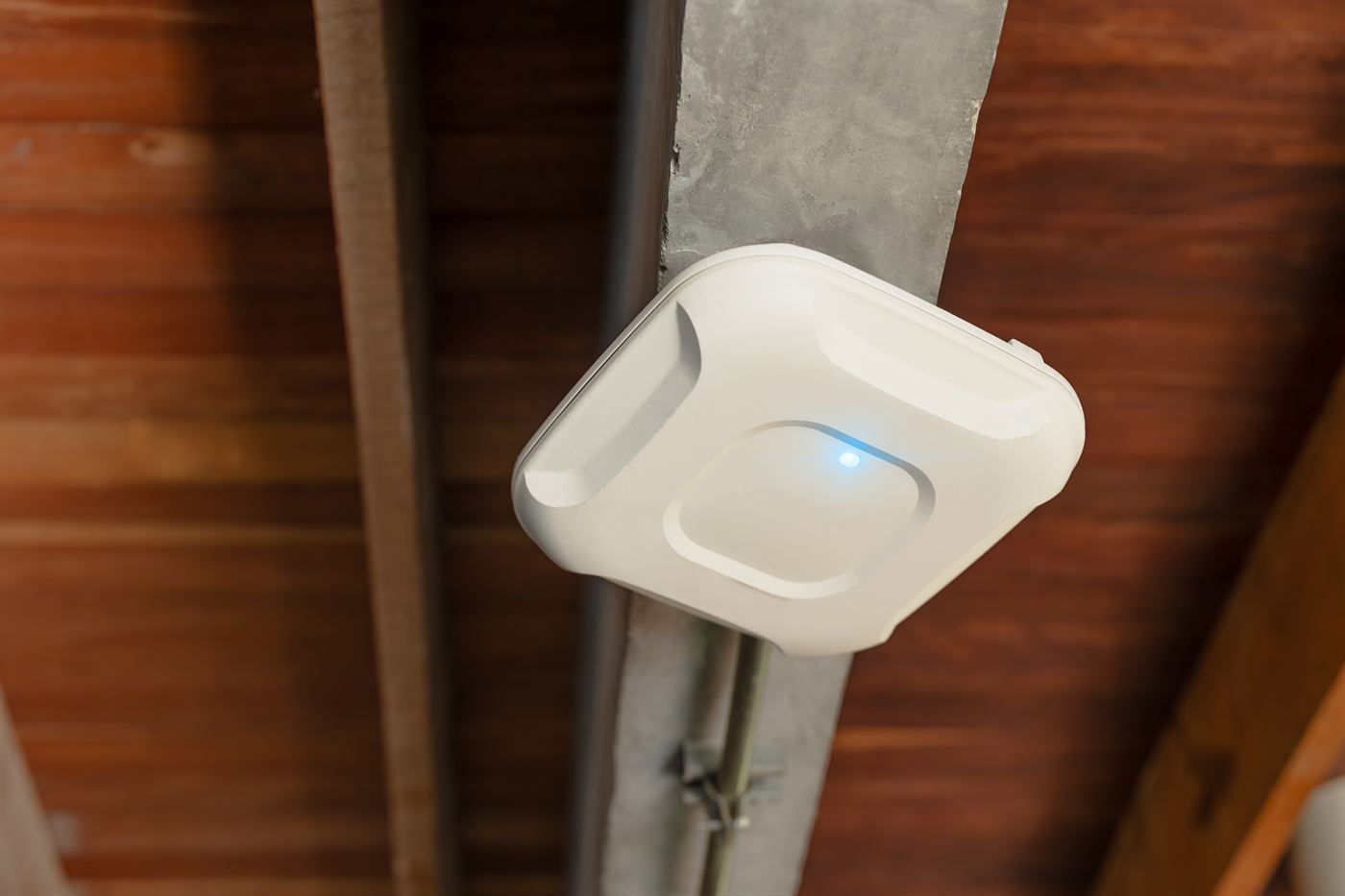
It is tempting to treat wireless as a hardware purchase: pick a model, mount a few units and see what happens. In practice, walls, glass, lifts, furniture and neighbouring networks all change how a signal behaves. A site survey replaces guesswork with measurements.
Three kinds of survey
- Predictive: a planning model built from floor plans and materials, used before anything is installed
- Passive: measuring existing signal strength and interference as a person walks the site
- Active: testing real connections and throughput once equipment is in place
What a survey should tell you
Where coverage is weak, how many access points are needed, where they should be mounted, which channels to use and where roaming between access points may struggle. It also shows areas that need extra capacity, such as meeting rooms and open-plan floors.
Check again after installation
Once access points are mounted and powered, a validation survey confirms the result matches the plan. Small adjustments to position or power at this stage cost far less than complaints after go-live.